Types of GPS Trackers: Hardwired, Plug-In, Battery and Asset
The GPS tracking device market is set to rise from USD 4.52 billion in 2026 to USD 14.98 billion by 2033, and much of that growth comes from businesses realising that not every asset needs the same tracker. At the same time, the global fleet management market is projected to grow from USD 30.1 billion in 2026 to USD 122.3 billion by 2035, which means millions of new vehicles, trailers and pieces of equipment will need a tracking solution in the years ahead.
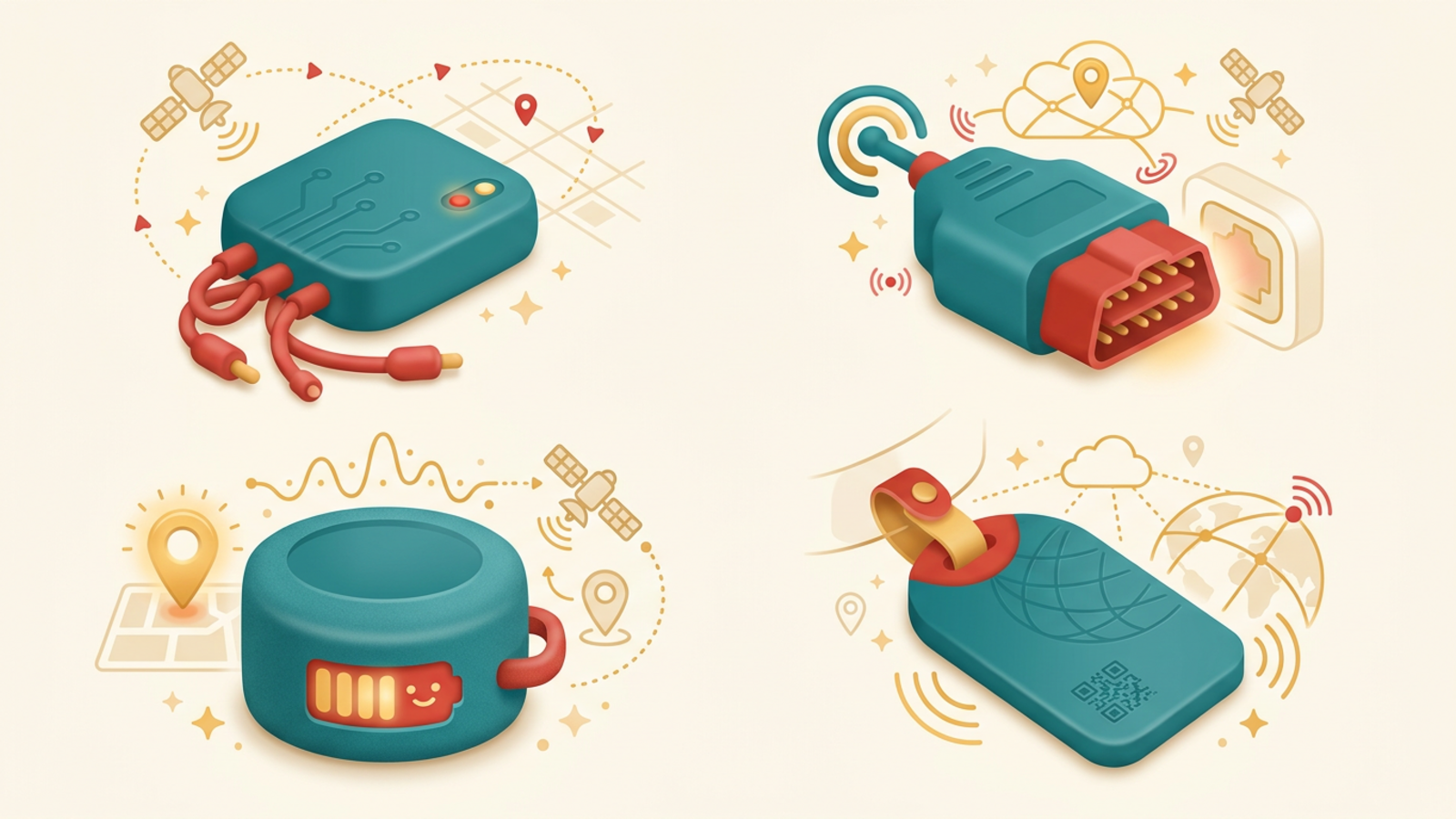
Four tracker types cover nearly every use case: hardwired, OBD plug-in, battery-powered and asset. Each one has a different power source, installation method, reporting capability and price point. Choosing the wrong type means paying for features you can’t use, or missing the ones you need.
The problem most buyers face is that “GPS tracker” gets used as though it describes a single thing. A fleet manager fitting 50 company cars has different needs from a construction firm monitoring excavators across three sites, or a logistics operator tagging intermodal containers. The tracker type that saves one operation money breaks another one’s workflow.
Challenges With Picking the Right GPS Tracker Type
The four tracker types look similar on the outside but behave very differently in the field. Hardwired trackers need an installer and a wiring diagram. OBD devices fit in seconds but only work on vehicles with the right port. Battery trackers eliminate the wiring problem but introduce a charging or replacement schedule. Asset trackers handle outdoor abuse, but their long reporting intervals can feel slow if you need minute-by-minute visibility.
Power supply is the first real constraint. Any asset with a reliable 12V or 24V feed can support a hardwired or OBD unit. Anything without a built-in power source falls to battery options. Inside that category, reporting frequency and battery longevity pull in opposite directions: a tracker pinging every 30 seconds drains in days, while one that reports every few hours can last months. Getting that balance wrong means either dead trackers in the field or cellular bills you did not budget for.
Coverage is the other constraint. All four types rely on GPS satellites for positioning and a cellular or satellite network to relay data. In remote areas with weak cell coverage, standard cellular trackers go dark. Satellite-connected asset trackers solve that but cost more per month. Factor coverage into the choice before you order hardware.
| Tracker Type | Power Source | Installation | Best For | Typical Cost |
|---|---|---|---|---|
| Hardwired | Vehicle 12V/24V supply | Professional wiring into fuse box | Permanent fleet installs, tamper-resistance | $50 to $200 + install labour |
| OBD Plug-In | OBD-II port (vehicle power) | Plug in under dashboard, no tools | Field vehicles, rentals, short-term deployments | $30 to $100 + data plan |
| Battery-Powered | Built-in rechargeable battery | Magnetic mount or strap, no wiring | Trailers, bikes, personal items without power | $30 to $120 + data plan |
| Asset Tracker | Long-life battery (months to years) | Bolted, strapped or magnetically attached | Heavy equipment, containers, remote assets | $80 to $300 + data plan |
Hardwired GPS Trackers
A hardwired tracker connects directly to the vehicle’s electrical system. An installer splices into the fuse box to tap constant power, which means the unit stays on whether the engine is running or not. That always-on connection makes hardwired trackers the strongest choice for permanent fleet deployments where you want continuous location, ignition state, door alerts and speeding notifications.
Because the device is hidden behind panels and wired in, it is much harder for a driver or thief to remove. That tamper-resistance is why large fleets and insurers tend to prefer hardwired installs for high-value vehicles. The downside is installation cost. A professional fit takes 30 to 60 minutes per vehicle, which adds up across a large fleet.
Best for: company cars, delivery vans, trucks and any vehicle where you want permanent, tamper-proof tracking with real-time alerts.
OBD Plug-In GPS Trackers
OBD plug-in trackers slide into the standard OBD-II diagnostic port found on virtually every petrol and diesel vehicle sold since 1996. No tools, no wiring and no appointment with an installer: the device draws power from the port and starts reporting within minutes. Most OBD trackers also pull engine diagnostic codes, fuel efficiency data and mileage directly from the vehicle, which makes them useful for small business owners who want tracking and basic telematics in one device.
The trade-off is visibility. An OBD dongle is obvious to anyone who looks under the dashboard, which makes it easy for a determined driver to unplug. It also stops working the moment it leaves the port, so it is not the right choice for assets that might be separated from the vehicle. But for sales fleets, pool cars and any situation where you need tracking live this week without scheduling installers, OBD plug-ins are the fastest path. Most consumer ranges of vehicle GPS trackers lead with plug-in and magnetic-mount options for exactly that reason.
Best for: rental vehicles, employee cars, small fleets where quick deployment matters and the owner controls who has access to the vehicle.
Battery-Powered GPS Trackers
Battery-powered trackers carry their own rechargeable power supply, which means they work on any object regardless of whether it has a 12V feed. Stick one under a trailer with a magnetic mount, cable-tie it to a bicycle frame or slip it into a bag. When there is no vehicle wiring to tap, this type is the only viable GPS option.
Battery life is the defining variable. A tracker set to ping every 10 seconds drains in a day or two. One set to report every 4 hours can last two to three months before needing a charge. That makes battery trackers well-suited to slow-moving assets: trailers that sit at depots between runs, personal items, or equipment that moves infrequently. For anything that needs minute-by-minute updates around the clock, battery trackers are a poor fit unless you can charge or swap them regularly.
Best for: trailers, personal valuables, bikes, equipment that lacks a power supply and assets where interval reporting is acceptable.
Asset GPS Trackers
Asset trackers are battery-powered units built for a harsher job. They carry larger batteries than consumer trackers, often rated for months or years of field use. The housings meet industrial protection ratings to handle moisture, vibration and temperature swings on construction sites, agricultural operations and port yards. Many support satellite connectivity in addition to cellular, so they keep reporting from remote worksites where cell coverage is unreliable.
The reporting cadence on asset trackers is typically longer than vehicle trackers: one report every few hours is common, which preserves battery life on equipment that moves infrequently. Some units include motion sensors that trigger more frequent updates when an asset starts moving and revert to a low-power heartbeat when it is stationary. That approach stretches battery life without sacrificing awareness during active use.
Best for: excavators, generators, compressors, shipping containers and any high-value equipment that spends time off the cellular grid.
How to Match the Tracker Type to Your Use Case
Start with the power question. Does the asset have an accessible 12V or 24V supply? If yes, hardwired and OBD options are on the table. If no, you are choosing between a standard battery tracker and a ruggedised asset tracker, and the deciding factor is environment and reporting interval.
Next, consider installation speed and scale. A hundred vehicles need either OBD plug-ins for same-day rollout or a scheduled installer programme for hardwired units. Hardwired wins on tamper-resistance; OBD wins on speed. For a dozen pieces of heavy equipment scattered across remote sites, an asset tracker with satellite fallback is almost always the correct answer.
Finally, match reporting frequency to the subscription cost you are willing to pay. Real-time cellular reporting on a vehicle fleet costs more per month than interval reporting on a trailer sitting in a yard. Size the plan to the actual need, not to the maximum the hardware supports. For a full walkthrough of the decision criteria, read our guide on how to choose a GPS tracker, and if you are weighing real-time against store-and-forward approaches, the comparison of active vs passive GPS tracking covers that trade-off in detail. You can also explore how GPS tracking works across different industries for more context on where each type gets deployed.
Frequently Asked Questions (FAQs)
What are the main types of GPS trackers?+
The four main types are hardwired trackers, OBD plug-in trackers, battery-powered trackers and asset trackers. Hardwired units connect to the vehicle’s power supply for always-on tracking. OBD plug-ins slide into the diagnostic port. Battery trackers work on any object without a power source. Asset trackers are ruggedised battery units built for heavy equipment and containers.
What is an OBD GPS tracker?+
An OBD GPS tracker plugs into the OBD-II diagnostic port found under the dashboard of most vehicles built after 1996. It draws power from the vehicle and starts reporting location the moment you insert it. No wiring is needed, which makes it the fastest type to deploy. Most OBD trackers also read engine fault codes and report fuel efficiency data.
Are battery-powered GPS trackers any good?+
Battery-powered GPS trackers are excellent for assets that lack a built-in power supply, such as trailers, containers, bicycles or construction equipment. Modern units run for months on a single charge when set to report at intervals rather than continuously. The main trade-off is that reporting frequency is limited by battery capacity, so they are not ideal when you need second-by-second updates.
What is a hardwired GPS tracker?+
A hardwired GPS tracker is installed directly into a vehicle’s electrical system, usually behind the dashboard or under a seat. It draws constant power, so it never runs flat, and it can monitor ignition state, trigger alerts when the engine starts, and report in real time around the clock. Because installation requires splicing into the wiring, hardwired trackers are harder to remove or tamper with than plug-in alternatives.
Which GPS tracker type is best?+
The best GPS tracker type depends on what you are tracking. Hardwired trackers are best for permanent fleet installs where tamper-resistance matters. OBD plug-ins suit rental vehicles, field reps’ cars and short-term deployments. Battery-powered trackers fit anything without an onboard power supply. Asset trackers are designed for heavy equipment, trailers and shipping containers that move between sites. Most fleets use more than one type.