GPS Tracking for Logistics and Supply Chain Visibility
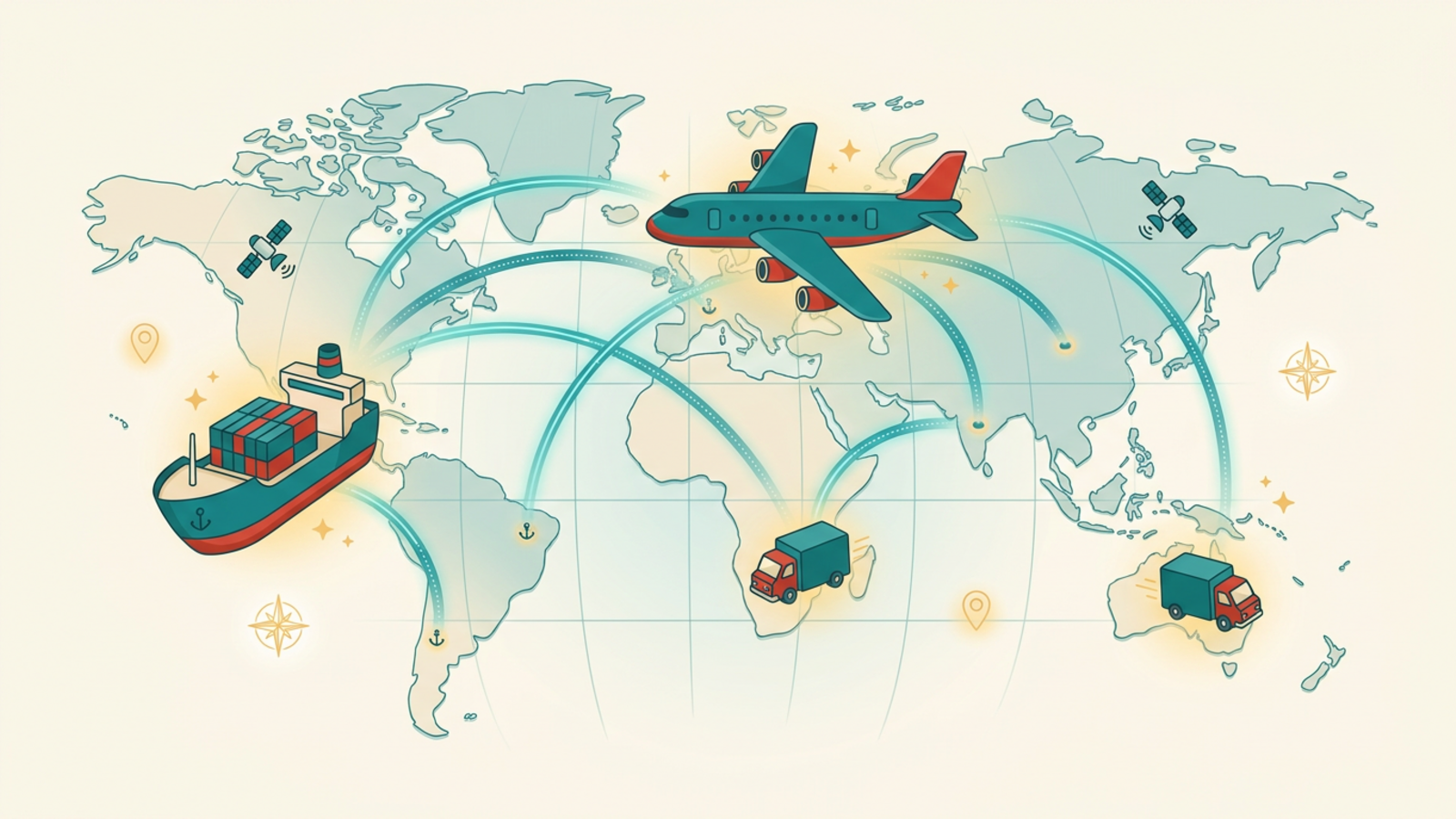
Logistics runs on information, and the most important piece is simple: where is the shipment right now? Cargo theft losses surged 60% to nearly USD 725 million in 2025, a number that exposes exactly how expensive it is to lose track of freight. At the same time, the global supply chain management market is projected to grow from USD 39.22 billion in 2026 to USD 97.57 billion by 2035, which means the pressure to run tighter, smarter operations is only building.
GPS tracking has become the standard answer to both pressures. It gives operations teams a live map of every truck, trailer and container, and it feeds the data that drives better ETAs, faster theft recovery and lower fuel bills. This guide explains how it works, where it fits across the supply chain, and what to look for when you roll it out.
The Challenges of Moving Freight Without Visibility
Ask any logistics manager what keeps them up at night and the answers cluster around the same problems. Drivers go off-route without any alert. Trailers sit idle at a drop yard for days before anyone notices. A customer calls to ask where their shipment is, and the dispatcher has to guess based on the last check-in call from hours ago.
Cargo theft adds another layer of risk. Organised crime groups target high-value loads at truck stops, staging areas and overnight drop points. Without a tracker, a stolen trailer can travel hundreds of miles before the loss is even discovered. By then, recovery is unlikely.
Temperature-sensitive freight faces its own version of the problem. A reefer unit that fails at 2 a.m. can ruin an entire load before morning. Without remote monitoring, no one knows until the driver arrives at the destination. These are the concrete gaps that GPS tracking closes.
How GPS Tracking Works Across the Supply Chain
A GPS tracker receives signals from satellites overhead and calculates its position through a process called trilateration. That position is then sent over a cellular (4G or LTE-M) or satellite network to a fleet management platform, where dispatchers see it on a live map. Most trackers report every 30 seconds to 5 minutes during active movement and go into low-power mode when parked.
The data does not stop at a dot on a map. Modern platforms layer on geofences (virtual boundaries that trigger an alert when crossed), route compliance checks, and estimated arrival calculations based on real-time traffic. A trailer that leaves a depot at an unusual hour, or a truck that idles too long at an unscheduled stop, generates an alert that a human can act on immediately.
For a broader look at how GPS tracking is applied across industries, the underlying technology is the same; what changes is the hardware form factor and the alert rules that matter for each use case.
GPS Tracking at Each Stage of the Supply Chain
First Mile: Pickup and Line-Haul
At the origin, GPS tracking confirms when a driver arrives at a shipper, when loading is complete and when the truck departs. That timestamp triggers notifications to the next stop in the chain, so receiving teams can prepare instead of waiting blindly. On long-haul routes, live location feeds ETAs that update as traffic or weather changes.
Middle Mile: Distribution Centres and Cross-Docking
Trailers at a distribution centre are still assets that need managing. A trailer that sits on the wrong dock for two hours holds up the next load. GPS yard-management tools place trailers on a real map of the yard, so spotters know exactly where to find them without walking every row.
Last Mile: Final Delivery
Last-mile delivery is where customers feel the difference most. A live tracking link sent by text or email lets a homeowner know that the truck is four stops away. Drivers get turn-by-turn routing optimised for the delivery sequence. Both effects reduce the “attempted delivery” failures that cost carriers an average re-delivery fee and a frustrated customer. Platforms written specifically for delivery fleet operations pair that customer-facing tracking link with route sequencing, so the driver order and the promised window come from the same plan.
Cargo Theft Prevention and Recovery
GPS tracking changes the math on cargo theft in two ways. First, it deters. Professional cargo thieves target predictable, unmonitored loads. A visible tracking sticker raises the risk enough that many organised groups move on to easier targets.
Second, it enables recovery. When a trailer does go missing, the tracking platform shows its last known location and movement history. Law enforcement can follow a live trail instead of starting cold. Recovery rates for GPS-equipped cargo are dramatically higher than for untracked loads, particularly when the alert is acted on within the first hour.
Geofences are the first line of defence. Set a boundary around a legitimate overnight stop; if the trailer moves, an alert fires immediately. Pair that with an after-hours movement rule (any motion between midnight and 5 a.m. triggers a call) and you cover the peak theft window without needing a human watching a screen.
ETA Accuracy and Customer Expectations
Shippers and receivers have grown used to the tracking experience they get from parcel carriers: a live map, a countdown and a notification when the driver is nearby. The same expectation now applies to freight. GPS data makes it possible to generate an ETA that updates continuously based on actual position and traffic, rather than a static window calculated at booking.
The downstream effects are measurable. Receivers can staff dock doors to match the actual arrival instead of keeping workers waiting. Manufacturers running just-in-time production can adjust line schedules when a delivery will be early or late. Those adjustments require data, and data requires tracking.
Integrating GPS Data Into Your Operations
A GPS tracker on its own is a location device. The value multiplies when the data connects to the systems already running the operation: a transportation management system (TMS) that compares planned versus actual routes, a warehouse management system (WMS) that knows when inbound trailers arrive, and an ERP that updates inventory the moment a shipment is received.
Most modern fleet tracking platforms expose APIs that feed these systems in real time. Before choosing a tracking provider, verify that it can push location events and geofence alerts to your TMS or ERP. A closed platform that keeps data inside its own dashboard is a dead end as your operation grows.
For operations that want end-to-end supply chain tracking from a single platform, GPX connects vehicle location, asset tracking and shipment-level visibility in one view, which removes the manual step of reconciling data from separate systems.
Choosing the Right GPS Tracking Setup for Logistics
Logistics fleets have two main hardware options: hardwired trackers that draw power from the vehicle and report continuously, and battery-powered asset trackers that attach to trailers, containers or pallets and report on a longer interval. Most over-the-road operations use both.
Hardwired units belong on powered vehicles: tractors, delivery vans, service trucks. They never run out of battery and can pull engine diagnostics alongside location. Battery-powered trackers go on non-powered assets: trailers, shipping containers, portable refrigeration units and high-value returnable packaging like roll cages or dollies. For one-way loads where the device is never coming back, disposable GPS tracking for delivery and logistics is cheap enough to treat as packaging rather than as hardware on the asset register.
Coverage matters too. LTE-based trackers work well across most of North America and Europe. For cross-border moves into areas with patchy cellular coverage, a hybrid device that switches to satellite when cellular drops is worth the extra cost. A frozen location reading on a border crossing at 2 a.m. is not useful.
For a full breakdown of what to evaluate before buying, see the guide to GPS fleet tracking and the detailed overview of GPS asset tracking for non-powered equipment.
Ready to close the visibility gap in your supply chain? Start with our guide to how GPS tracking works and use it as the foundation for your rollout plan.
Frequently Asked Questions (FAQs)
How is GPS used in logistics?+
GPS trackers installed on trucks, trailers and containers broadcast location data over cellular networks at regular intervals. Dispatchers see every asset on a live map, receive alerts when a vehicle deviates from its route, and share accurate ETAs with customers. The same data feeds into fuel-usage reports, driver-behaviour scores and compliance logs.
What is supply chain visibility?+
Supply chain visibility means knowing where every shipment, vehicle and asset is at any point in its journey, from the supplier’s dock to the customer’s door. GPS tracking is the backbone of that visibility for over-the-road moves, while RFID and BLE fill in the gaps inside warehouses and at distribution centres.
How does GPS reduce cargo theft?+
A live-tracking device reports a vehicle’s position every minute or so, and a geofence triggers an instant alert the moment a trailer leaves an approved zone. That alert gives security teams and law enforcement a real-time trail to follow. Studies show that recovery rates for GPS-equipped cargo are significantly higher than for untracked shipments.
Can GPS improve delivery ETAs?+
Yes, and it does so in two ways. First, dispatchers can reroute drivers around traffic in real time, cutting dwell time. Second, customers receive live tracking links instead of static estimated windows, so they prepare for the actual arrival rather than a six-hour guess. Both effects reduce failed deliveries and re-delivery costs.
What is the difference between GPS tracking and telematics?+
GPS tracking is one part of telematics. Telematics combines location data from GPS with engine diagnostics read from the vehicle’s OBD port: speed, RPM, idle time, harsh braking and fuel consumption. Pure GPS tracking tells you where a vehicle is; telematics adds context about how it is being driven and how the engine is performing.