Top 7 Non-Powered Asset Trackers (Battery and Solar)
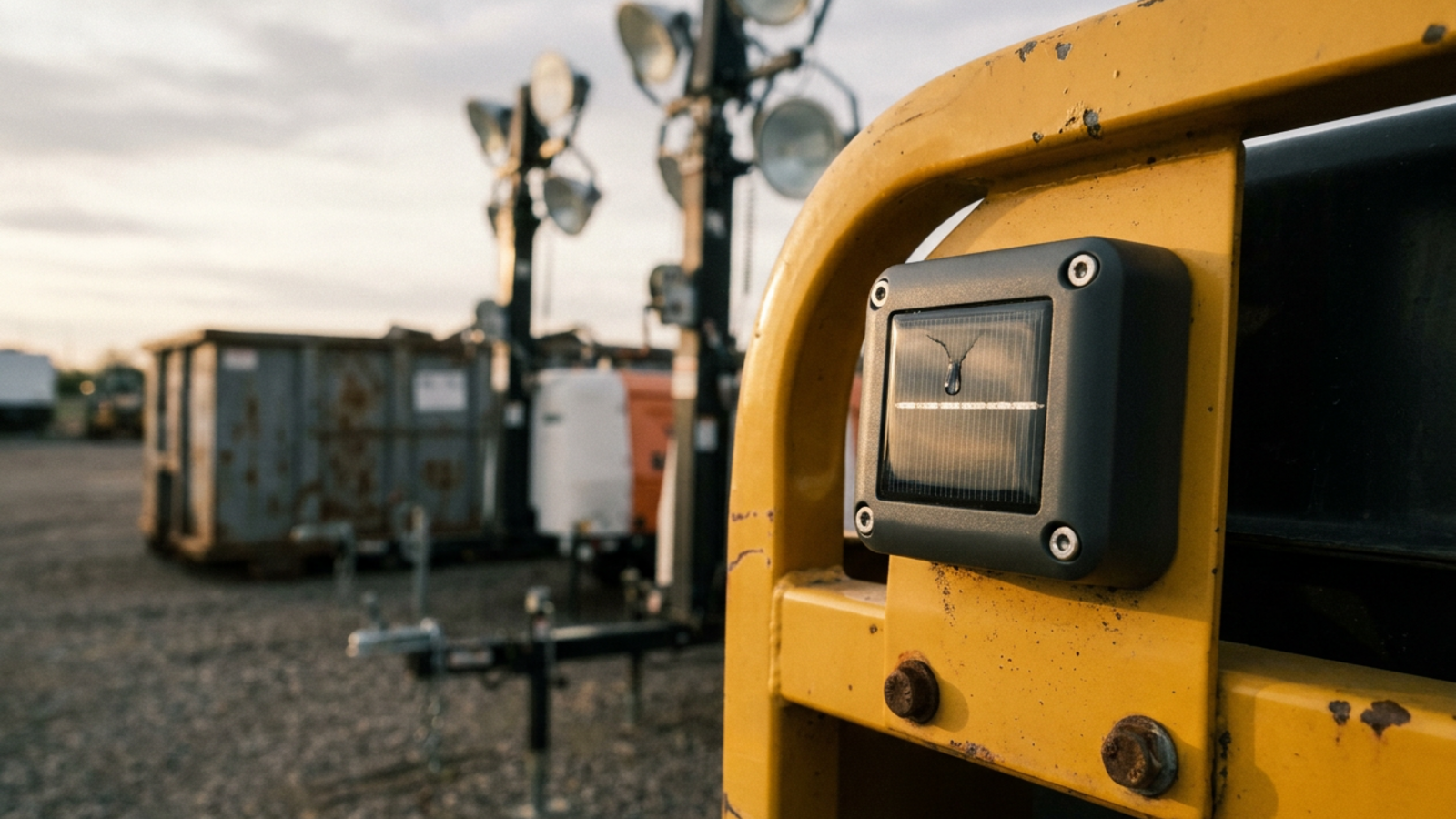
Non-powered asset tracking uses battery or solar GPS trackers to report the location and status of equipment that has no power source of its own. The trackers mount directly on trailers, generators, light towers, bins and containers, so you see every asset on a map without running wires.
Unpowered equipment is easy to lose. A light tower sits idle on a finished job, a trailer due for service goes missing, and a stolen generator goes unnoticed for days, long after the best window for theft recovery has closed.
Every IoT asset tracker below solves that without wired power. The real decision is how each one trades update frequency against battery life.
How to Choose a Non-Powered Asset Tracker
- Power source: Replaceable batteries suit assets that stay in the field for years. Rechargeable units suit equipment that returns to a yard. Solar suits assets parked outdoors in steady sun.
- Update interval against battery life: Published battery figures assume a set report rate, usually one fix a day. Every extra report shortens that life.
- Network: LTE-M and NB-IoT cover most job sites. Satellite covers off-grid sites. LoRaWAN fits a single yard with its own gateway.
- Mounting and IP rating: Match the mount (magnet, bolt, screw or adhesive) to the asset surface. Look for IP67 or higher to handle rain, washdown and dust.
- Software platform: Confirm the dashboard handles geofences, movement alerts and asset utilization reports. Some hardware ships without software, so find out who supplies it.
What You Give Up Without Wired Power
Cutting the wire costs you something. Here is what buyers give up and how they manage it.
| Trade-Off | How Buyers Manage It |
|---|---|
| Slower updates | Set devices to report once or twice a day, with extra reports when the asset moves. |
| Battery swaps or charging visits | Build swaps into routine maintenance, using a GPS tracker battery life baseline to set the schedule. |
| Battery drain in freezing weather | Expect shorter battery life on assets that sit outdoors through winter, and bring those swaps forward in the schedule. |
| Solar output in shade or winter | Mount panels with a clear view of the sky and run on the internal backup battery through low-light months. |
| Weak signal inside steel containers | Steel walls block GPS and cellular signals, so mount the tracker on the outside of the container with a view of the sky. |
| No GPS fix indoors | Under a warehouse or depot roof, a tracker reports its last outdoor fix. If assets spend time indoors, check the spec sheet for Wi-Fi or cell-tower location fallback. |
| Limited live tracking in transit | Use motion-triggered reporting so the tracker wakes and reports when the asset moves. |
1. GPX AssetTrack [Replaceable Battery]
GPX (GPX Intelligence) builds its own tags, trackers, network and platform for business asset tracking. AssetTrack is its cellular GPS tracker for equipment, containers, trailers and tools.
GPX rates AssetTrack at 10 years on one daily GPS fix, using a replaceable battery. Its Scout AI layer geofences every site in seconds and fires an instant alert when an asset moves without authorization.
- Best for: Businesses tracking 10 or more high-value assets across equipment yards, job sites and supply chains.
- Power: Replaceable battery.
- Network: Cellular.
- Standout features: Magnetic mount, IP67 rating, anti-tamper alerts, and idle and dwell-time analytics.
Benefits
- Published battery life of 10 years at one GPS fix a day.
- Magnetic mount installs with no tools or wiring.
- Idle and dwell reports flag under-used equipment so it goes back to work.
Drawbacks
- No published pricing.
- More frequent reporting shortens the 10-year figure.
- Built for business fleets, not single-tracker buyers.
2. Logistimatics Asset-422 [Replaceable Battery]
Logistimatics sells GPS trackers direct to small businesses, contractors and families. The Asset-422 is its battery tracker for equipment, electronics, medical equipment and containers.
The Asset-422 costs $39.95 and runs up to 3 years at one report per day. Every Logistimatics tracker needs a plan: $12.50 a month billed annually, or $19.99 month to month.
- Best for: Small businesses tracking a handful of tools, generators or containers. Logistimatics sends businesses with 10 or more high-value assets to its sibling brand, GPX.
- Power: Replaceable battery (not rechargeable).
- Network: 4G LTE-M.
- Standout features: IP67 rating, optional magnetic mounting plate, and an anti-tamper switch that sends an instant text or email alert.
Benefits
- Published hardware price of $39.95.
- Tamper alerts reach you by text or email the moment someone removes the unit.
- No contracts; pause or cancel the plan any time.
Drawbacks
- A paid plan is required on top of the hardware.
- Battery life tops out at 3 years at one report a day.
3. Digital Matter Oyster3 [Replaceable Battery]
Digital Matter designs low-power GPS hardware for IoT solution providers and system integrators. The Oyster3 is a compact, rugged tracker that runs on standard replaceable batteries.
Digital Matter sells hardware only. Buyers get the tracking dashboard from a software partner that resells the device.
- Best for: Integrators and fleets that already run a tracking platform and want configurable hardware.
- Power: Replaceable battery.
- Network: LTE-M, NB-IoT.
- Standout features: Compact sealed housing, configurable firmware and custom alert triggers.
Benefits
- Standard batteries keep field swaps simple.
- Firmware settings adapt to specific alert and reporting needs.
- Small enough to conceal on bins and compact equipment.
Drawbacks
- No software of its own; you bring the platform.
- End-user support runs through partners, not Digital Matter.
4. Samsara AG45 [Replaceable Battery]
Samsara runs a connected operations platform covering vehicles, equipment and sites. The AG45 is its battery-powered asset gateway for unpowered trailers and equipment.
Location reports land on the same Samsara map as the rest of the fleet. Dispatchers get one view of trucks, trailers and yard equipment.
- Best for: Fleets already on Samsara that want unpowered assets in the same dashboard.
- Power: Replaceable battery.
- Network: Cellular.
- Standout features: Shared map with Samsara vehicle data and built-in asset utilization reporting.
Benefits
- One platform for powered and unpowered assets.
- Utilization reports show which equipment earns its keep.
Drawbacks
- Delivers the most value when the rest of the fleet runs on Samsara.
- A full operations platform is more than you need to track a few bins.
5. Globalstar SmartOne Solar [Solar]
Globalstar operates its own satellite network. SmartOne Solar is its solar-powered satellite tracker for assets parked beyond cellular coverage, such as generators, containers, heavy equipment and trailers.
A built-in solar panel recharges the internal battery, so there is no battery swap schedule. If you only track trailers, read the trailer tracking devices roundup as well.
- Best for: Operators with equipment on remote sites outside cell coverage.
- Power: Solar.
- Network: Globalstar satellite.
- Standout features: Satellite reporting with no cell network required and solar recharging.
Benefits
- Keeps reporting where cellular trackers go silent.
- No battery swap visits to remote sites.
Drawbacks
- Needs a clear view of the sky for both charging and the satellite link.
- Solar output drops in shade and on short winter days.
6. Teltonika TAT140 [Replaceable Battery]
Teltonika builds GPS tracking hardware sold through platform partners and integrators. The TAT140 is its battery-powered asset tracker with user-replaceable batteries.
It targets unpowered assets like containers, trailers and construction equipment. As with Digital Matter, the tracking software comes from a partner.
- Best for: Integrators and fleets that want long-life hardware on a platform they already use.
- Power: Replaceable battery.
- Network: Cellular.
- Standout features: User-replaceable batteries and a wide choice of partner platforms.
Benefits
- Swap batteries in the field instead of replacing the unit.
- Partner choice lets you keep your current dashboard.
Drawbacks
- No software of its own; you bring the platform.
- Purchasing and support run through partners.
7. Queclink GL300MA [Rechargeable]
Queclink makes telematics hardware sold worldwide through distributors. The GL300MA is a compact rechargeable GPS tracker that runs on LTE-M.
Rechargeable units fit equipment that comes back to a yard on a regular cycle. Crews charge the tracker and move it to the next asset.
- Best for: Equipment and bins that return to a depot often enough for regular charging.
- Power: Rechargeable.
- Network: LTE-M.
- Standout features: Portable form that moves between assets in seconds.
Benefits
- Small and portable.
- Rechargeable, so there are no replacement batteries to buy.
Drawbacks
- Needs regular charging visits.
- Requires third-party software, sold through distributors rather than direct.
Shortlist by Where Your Equipment Sits
Start with location, then power. Equipment beyond cell coverage points to satellite and solar. Assets that cycle back to a yard suit a rechargeable unit. Equipment that stays in the field for years needs the longest published replaceable battery life you can find.
| Product | Vendor | Power Source | Network | Mounting | Published Battery Life | Published Price |
|---|---|---|---|---|---|---|
| AssetTrack | GPX | Replaceable battery | Cellular | Magnetic | 10 years (1 GPS fix/day) | |
| Asset-422 | Logistimatics | Replaceable battery | 4G LTE-M | Optional magnetic plate | Up to 3 years (1 report/day) | $39.95 |
| Oyster3 | Digital Matter | Replaceable battery | LTE-M / NB-IoT | |||
| AG45 | Samsara | Replaceable battery | Cellular | |||
| SmartOne Solar | Globalstar | Solar | Satellite | |||
| TAT140 | Teltonika | Replaceable battery | Cellular | |||
| GL300MA | Queclink | Rechargeable | LTE-M | Portable |
Disclosure: GPX and Logistimatics are clients of Mo’ Saci Science.
Pick the two rows that match your sites and power needs, then check each one’s software against the dashboard you already run. Need the wider picture first? The GPS asset tracking guide explains how tracking works across powered and unpowered fleets, from hardware to software.
Frequently Asked Questions (FAQs)
What counts as a non-powered asset?+
Any equipment without its own electrical system or steady power supply. Common examples are shipping containers, waste bins, utility trailers, generators and light towers. Tracking them takes a device with its own battery or solar panel.
How long does a battery tracker last?+
It depends on how often the tracker reports. Published figures on this list run from up to 3 years for the Logistimatics Asset-422 to 10 years for GPX AssetTrack, both at one report a day. Minute-by-minute tracking drains any battery far faster.
Do solar trackers work in winter?+
Yes. A solar tracker stores energy in an internal battery and runs on that reserve through short, cloudy days. Mount the panel with a clear view of the sky and keep it free of snow and dirt.
Should I choose a rechargeable or replaceable battery?+
Choose rechargeable for equipment that returns to a yard on a regular cycle. Choose replaceable for assets that stay in the field for years without coming home.
Is a monthly subscription needed?+
For most cellular and satellite trackers, yes. The plan covers network data and the software dashboard. Logistimatics, for example, charges $12.50 a month billed annually or $19.99 month to month.
Does it work without cell coverage?+
A cellular tracker can’t send live updates outside network range. Many store location fixes and upload them once signal returns. For sites with no coverage at all, choose a satellite tracker such as Globalstar SmartOne Solar.
How do you mount one without wiring?+
Use a heavy-duty magnet, industrial adhesive or a bolt-on bracket. Pick based on the asset surface and whether the tracker needs to stay hidden or move between assets.