Most Trusted 10 Freight Visibility Platforms
Quick answer: A freight visibility platform shows where your freight is in transit and predicts when it will arrive. One question decides the shortlist: does the location data come from carrier and telematics feeds, or from trackers you put on the freight itself? Answer that first, then compare modes and ETAs.
The carrier says the load is on time, but the last location update is hours old. Your receiving crew has to decide whether to hold the dock appointment.
A good shipment visibility platform answers two questions on that screen. When did the last update arrive, and what does it describe?
The ten platforms below pull location from carrier and partner feeds, from devices that ride with the cargo, or from both. For truckload and less-than-truckload (LTL), check first whether your carriers share data. At ocean and rail handoffs, check whether an update describes your freight, the equipment carrying it, or a reported milestone.
Where Shipment Visibility Goes Wrong
Carrier handoffs send teams back to check calls
A shipment record keeps showing the last known location after a driver change, a carrier handoff or the end of a freight leg. A check call covers the gap for a while. If the new carrier never starts sending updates, that answer goes stale.
Spot-market and brokered loads add a second gap. Some owner-operators and occasional drayage drivers decline the tracking app, or switch off phone location partway through a load.
Ask every vendor how its software flags an old position and names the carrier that last reported it.
Ocean and rail milestones leave gaps between legs
A vessel position tells you where the ship is. A container milestone tells you what was reported for your box. That difference decides when you book a pickup or return an empty container before demurrage and detention fees start.
On rail, ask whether you get a wagon-level feed or terminal events. Then ask how the system links those events to the next truck leg.
GPS drops out inside cross-docks and terminals
Satellite GPS loses its fix under warehouse roofs and between stacked containers. Freight sitting inside a cross-dock or intermodal terminal keeps showing its last outdoor position until it leaves the building.
Ask whether the platform fills that gap with Bluetooth gateways, Wi-Fi positioning or scan events, and how it labels an indoor position on the map.
An ETA outlives its source
A delivery estimate loses its value when its source goes quiet. Act on a stale estimate and you hold a dock open, pay for idle labor, run up detention charges, or miss an on-time in-full (OTIF) delivery window.
During a pilot, ask what triggers a new estimated time of arrival (ETA). Then confirm that dispatchers see when the source last reported. Check that the platform keeps time-stamped geofence arrival and departure records you can export when you dispute a carrier detention invoice.
Alert volume buries the exceptions that matter
A platform that turns every GPS ping and every minor delay into a notification trains dispatchers to ignore the feed. The alert that threatens a dock schedule or a production line then sits in the same queue as the noise.
Ask whether you can set alert rules by lane, customer or appointment, so a notification fires only when a delay changes a downstream decision.
A location update leaves theft and condition questions open
A route deviation or a missed arrival is an early warning sign of theft or a fraudulent pickup. Temperature-sensitive loads also need a complete condition record. A gap in the readings makes a rejected shipment harder to review.
Decide which exceptions need a sensor on the freight. Then name the person who acts when an alert fires.
The 10 Platforms at a Glance
| Platform | Where its location data comes from | Modes covered | ETA prediction | Published price |
|---|---|---|---|---|
| GPX | SmartLabel over a Bluetooth gateway network; AssetTrack Voyager over GPS, LTE cellular and Wi-Fi | Rides with the freight, dock to door | Yes, plus geofence-confirmed arrival | |
| project44 | Carrier and forwarder feeds, telematics, API and TMS integrations, DriveView app | Ocean, air, rail, truckload, LTL, parcel, barge, roll-on/roll-off, last mile | Yes, AI-powered across modes | |
| FourKites | EDI, GPS, milestone and status events from connected carriers | Truckload, LTL, parcel, ocean, air, rail, intermodal, drayage, final mile | Yes, machine-learning ETAs checked against carrier signals | |
| Shippeo | Carrier TMS integrations and the Shippeo driver app | Road truckload, LTL, parcel, rail, ocean, air, ports and terminals | Yes, for all shipments, per Shippeo | |
| Descartes MacroPoint | ELD+ dual-source tracking: telematics plus driver mobile app | Truckload, LTL, rail, ocean, air, parcel | Yes, predictive ETAs | |
| Overhaul | IoT devices, telematics, mobile and partner systems | Road, rail, ocean, air, final mile | Yes, ETA optimization in Shipment Manager | |
| Tive | On-freight trackers over cellular, Wi-Fi and GPS | Follows the tracker; lithium and non-lithium models for air freight | Yes, dynamic ETAs from the shipment’s own movement | |
| Decklar (formerly Roambee) | Its own sensors, carrier milestones, telematics, courier and 3PL events | Ocean, air, rail, truckload, LTL, milk runs | Yes, flags ETA changes as they happen | |
| Trimble Transporeon | Vehicle GPS and telematics, TMS integrations, air freight APIs, ocean carrier, terminal and vessel data | Road, ocean, rail, air, intermodal | Yes, predictive ETAs | |
| Infor Nexus | Multi-enterprise network that includes suppliers | Ocean, air, rail, truck, parcel | Yes, machine-learning ETAs and delay alerts |
Disclosure: GPX is a client of Mo’ Saci Science.
Capabilities are from each vendor’s own website, read on 20 November 2026; none of the ten publishes a price.
1. GPX
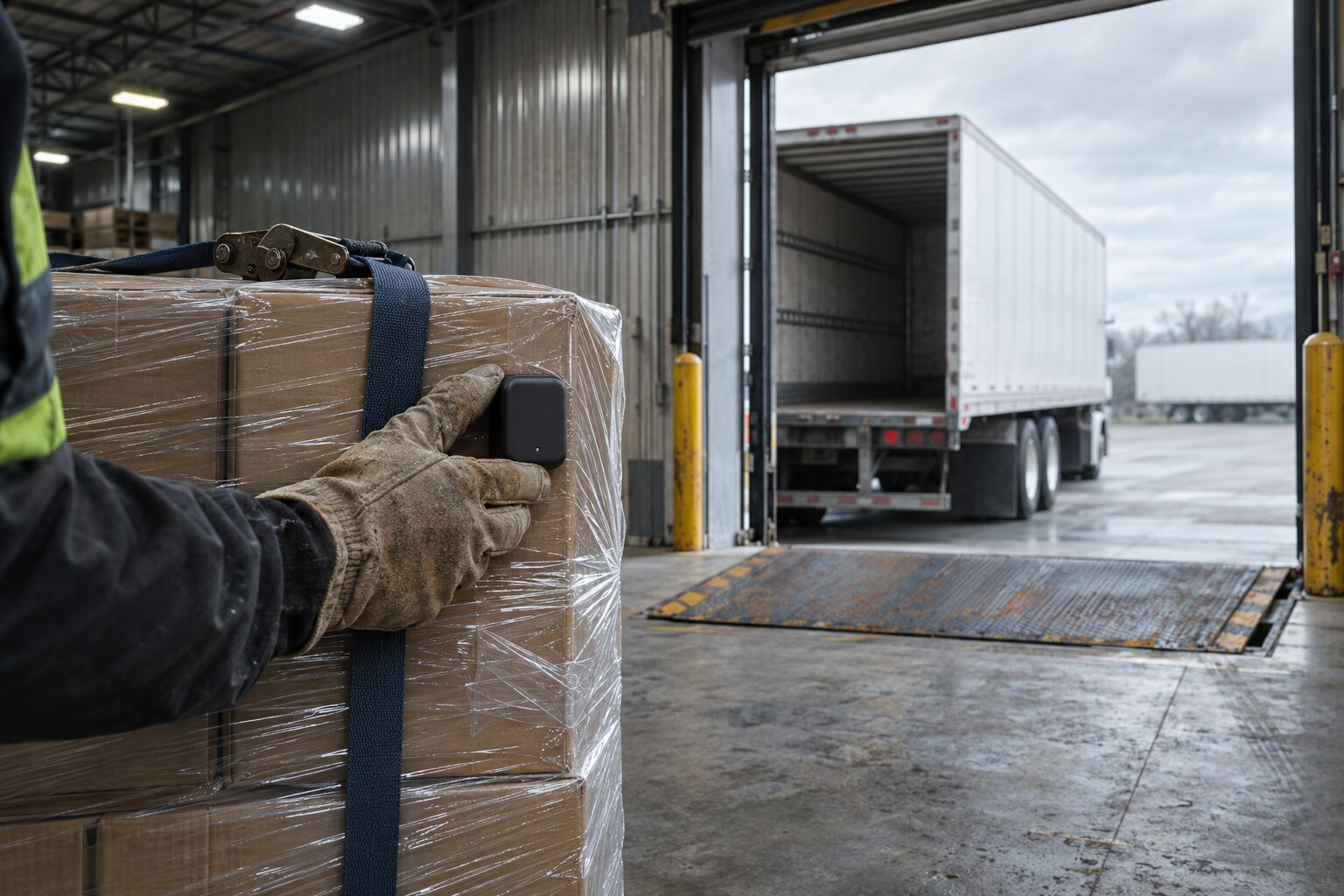
GPX puts the location source on the freight. Its peel-and-stick SmartLabel switches on when you tear the tab and measures 0.4 mm at its thinnest point. It runs up to 60 days and reports through a network of 150 million Bluetooth gateways.
The label needs no SIM and no charging. Once activated, it cannot be powered off.
- Best for: Shippers that want the location source to stay with the freight through every carrier handoff.
- Connectivity: GPS, LTE cellular and Bluetooth Low Energy (BLE), all reporting into one GPX platform. AssetTrack Voyager adds Wi-Fi positioning where GPS can’t see, such as cross-docks and warehouses.
- Standout features: Voyager confirms arrival with a geofence, a virtual boundary around a site. Scout AI answers plain-language questions about location data. Events flow into your TMS and ERP.
Benefits
- SmartLabel leaves nothing to recover at delivery. Compare the return and handling trade-offs in the guide to disposable shipment trackers.
- Voyager ships one-way or recharges for the next load. It runs up to seven months per charge at one GPS fix every four hours.
Drawbacks
- Every tracked shipment needs a GPX label or tracker applied before dispatch. Freight without a device has no GPX location source.
2. project44
project44 pulls carrier and forwarder data across every major mode. It offers door-to-door ocean visibility and wagon-level rail updates, which give planners a precise reference at a rail handoff.
- Best for: Shippers and third-party logistics providers (3PLs) running freight across many modes and carriers.
- Connectivity: Vehicle telematics, carrier and forwarder integrations, and the DriveView mobile app for carriers.
- Standout features: AI-powered ETAs across every mode and milestone. Its API-first design delivers updates inside your transportation management system (TMS) or enterprise resource planning (ERP) system.
Benefits
- Ocean and rail detail supports teams that plan inland legs around port and terminal handoffs.
- Updates land in the system planners already use to manage loads.
Drawbacks
- Visibility depends on connected carriers. Confirm support for the carriers that actually haul your lanes.
3. FourKites
FourKites builds a live digital twin of each shipment from EDI, GPS, milestone and status events. Its machine-learning ETAs are reconciled against carrier signals. The platform also layers in outside signals such as weather, traffic and port congestion.
- Best for: Large inbound networks coordinating receiving across modes.
- Connectivity: EDI, GPS, milestone and status events from carriers connected across every mode.
- Standout features: Shipment Twin puts real-time tracking, ETAs, carrier status, exception detection and proof of delivery in one view.
Benefits
- Weather, traffic and port congestion feed its ETAs.
- Receiving teams see inbound freight from every mode in one place.
Drawbacks
- The breadth fits a large multimode operation better than a small shipper running a few regular lanes.
4. Shippeo
Shippeo says its predictive ETA covers 100% of shipments. It reports status down to the handling unit or stock-keeping unit (SKU), so receiving teams look up one item inside a larger load.
- Best for: Road and multimodal operations that track goods inside a load.
- Connectivity: Carrier TMS integrations and Shippeo’s driver app.
- Standout features: Standardized milestones at shipment, handling-unit or SKU level, with status detail through ports and terminals.
Benefits
- Teams pick the level (shipment, handling unit or SKU) that matches the decision in front of them.
- The driver app gives carriers a second way to send updates.
Drawbacks
- Data quality rests on carrier integrations or driver app adoption. Check both with the carriers on your shortlist.
5. Descartes MacroPoint
Descartes MacroPoint runs ELD+, dual-source tracking that combines truck telematics with the driver’s mobile app. The second signal gives dispatchers a cross-check when a truck position looks wrong.
- Best for: Brokers and 3PLs tracking truckload freight hauled by outside carriers.
- Connectivity: Carrier electronic logging devices (ELDs), vehicle telematics and a driver mobile app.
- Standout features: ELD+ dual-source tracking, real-time “Arrived” status confirmation and proof of delivery.
Benefits
- Two signals give dispatchers a way to investigate a conflicting truck location.
- Proof of delivery gives receiving teams a record of the handoff.
Drawbacks
- Tracking depends on each carrier accepting the tracking request. Check participation on loads that change carriers or drivers.
6. Overhaul
Overhaul pairs shipment status with real-time risk intelligence and compliance safeguards. It runs dedicated programs for cargo theft and cold chain, so a location update also drives a security or condition decision.
- Best for: High-value or temperature-sensitive freight programs.
- Connectivity: IoT devices, telematics, mobile sources and partner systems.
- Standout features: VIN-, SKU- or asset-level tracking, cold chain monitoring, theft and tampering alerts, and ETA optimization in Shipment Manager.
Benefits
- Location and risk data sit together for cargo security teams.
- Device-agnostic intake supports programs that mix devices and partner feeds.
Drawbacks
- The security and compliance workflows suit teams with defined risk roles. A team that needs only last location and ETA uses a fraction of the platform.
7. Tive
Tive sells trackers that ride with the freight and report location alongside condition readings. Its Solo 5G reports over cellular, Wi-Fi and GPS and ships in lithium and non-lithium models for air freight.
- Best for: Shippers that need a condition record next to the location history.
- Connectivity: Cellular, Wi-Fi and GPS on Solo 5G.
- Standout features: Solo Pro carries sensors for temperature, humidity, light, shock, tilt and motion. It contains no lithium and is flight compliant to RTCA DO-160G.
Benefits
- Condition readings give context when you review temperature excursions or rough handling.
- The location source stays with the cargo when carriers change.
Drawbacks
- Every monitored shipment needs a tracker selected and applied before it leaves.
8. Decklar (formerly Roambee)
Decklar combines its own sensor signals with carrier milestones, telematics and courier or 3PL events. Put sensors on high-risk or time-critical freight and rely on reported milestones for the rest.
- Best for: Mixed freight programs that reserve sensors for selected lanes or shipments.
- Connectivity: On-freight sensors, telematics, aggregated carrier milestones, and courier or 3PL events.
- Standout features: Flags ETA changes, disruptions, quality issues and security breaches as they happen. Covers milk runs, the scheduled multi-stop routes, with package-level drop-off confirmation.
Benefits
- Sensor-equipped and carrier-reported freight sit in one platform.
- Sensor spend follows the risk of each shipment flow.
Drawbacks
- Mixed sourcing needs a written policy on which freight gets a device and which relies on partner milestones.
9. Trimble Transporeon
Trimble Transporeon links ocean shipments with the inland road or rail legs on either side. It connects planned, estimated and actual milestone times across the whole journey.
- Best for: Road-heavy shippers that also coordinate inland moves around ocean containers.
- Connectivity: GPS and telematics from connected vehicles and fleet systems, TMS integrations, air freight APIs, and container data from ocean carriers, terminals and vessel Automatic Identification System (AIS) signals.
- Standout features: Predictive ETAs recalculated from current shipment data, with coverage for road, ocean, rail, air and intermodal freight.
Benefits
- Linked milestones support teams coordinating a port transfer with the connecting truck or rail move.
- Telematics and TMS links give road planners live carrier movement.
Drawbacks
- Road visibility relies on carriers connecting their vehicles or fleet systems. Confirm coverage on the lanes and modes that matter to you.
10. Infor Nexus
Infor Nexus tracks ocean, air, rail, truck and parcel shipments on one platform, from pre-shipment through delivery. Supplier visibility sits in the same network, so teams tie a late shipment back to its supplier.
- Best for: Shippers that want supplier context alongside in-transit updates.
- Connectivity: A multi-enterprise collaboration network that includes suppliers.
- Standout features: Machine-learning ETAs and proactive alerts on delays and disruptions.
Benefits
- Teams start following freight before it ships.
- Delay alerts connect arrival changes to the wider supply picture.
Drawbacks
- The network pays off most when your suppliers and logistics partners join and share updates.
How to Choose by Freight Type
Pick the platform whose data source fits your freight. Use these checks to cut the list to two:
- Truckload and LTL: Verify carrier coverage lane by lane, including spot-market and occasional carriers.
- Parcel: Confirm which last-mile scans reach your screen.
- Ocean: Decide whether the container needs its own device. The guide to GPS container tracking covers the mounting, signal and battery trade-offs.
- High-value or temperature-sensitive loads: Name the location or condition event that triggers action, and the person who acts on it.
- Every mode: Ask how the platform shows the age of the last update and which alerts you can switch off.
Your next step: take your three busiest lanes and run two platforms side by side over the same period. Log every stale update, every missed handoff and every ETA change, then sign with the platform that left fewer gaps on your freight. For how GPS fits into wider logistics operations, read the guide to GPS tracking in logistics.
Frequently Asked Questions (FAQs)
How do freight visibility platforms get their location data?+
They pull updates from carrier and partner systems, read devices that travel with the freight, or combine both. Carrier feeds report a vehicle position or a shipment milestone. An on-freight device reports where the label or tracker on your shipment is.
How do I check whether a freight platform covers my U.S. lanes?+
Give the vendor a sample of your carriers and lanes, including occasional carriers and LTL handoffs. Ask where each update comes from and how often it refreshes. Then ask what the platform shows when a source stops reporting.
How do ELD telematics, EDI 214 feeds, and APIs work together in freight visibility software?+
ELD and telematics feeds report where the truck is, usually as GPS positions. An EDI 214, the standard carrier shipment status message, reports events such as pickup, arrival and delivery. APIs move those positions and events between the carrier, the visibility platform and your TMS or ERP. Ask which source the platform trusts when a 214 status and a GPS position disagree, and what happens when the driver or truck changes.
Can a freight platform tell me where a trailer is in the yard?+
A geofence or arrival milestone tells you the truck or shipment reached the site. If your yard team needs the trailer’s exact position or assigned spot, ask whether the platform connects to your yard management system (YMS) and see that workflow live. Check what the system shows after the tractor drops the trailer and leaves.
Does a vessel position confirm that my container is on board?+
No. A vessel position shows where the ship is. Look for a container-level loading milestone to confirm your box was reported on board. At destination, check which events show the container is ready for pickup and the empty return is complete.
How should I compare ETA accuracy during a pilot?+
Save the ETA at the moment your team would book a dock or notify the customer, then compare it with the confirmed arrival. Record missing and stale estimates alongside late ones. Test a carrier handoff as well as a simple delivery to see how the forecast behaves when the source changes.