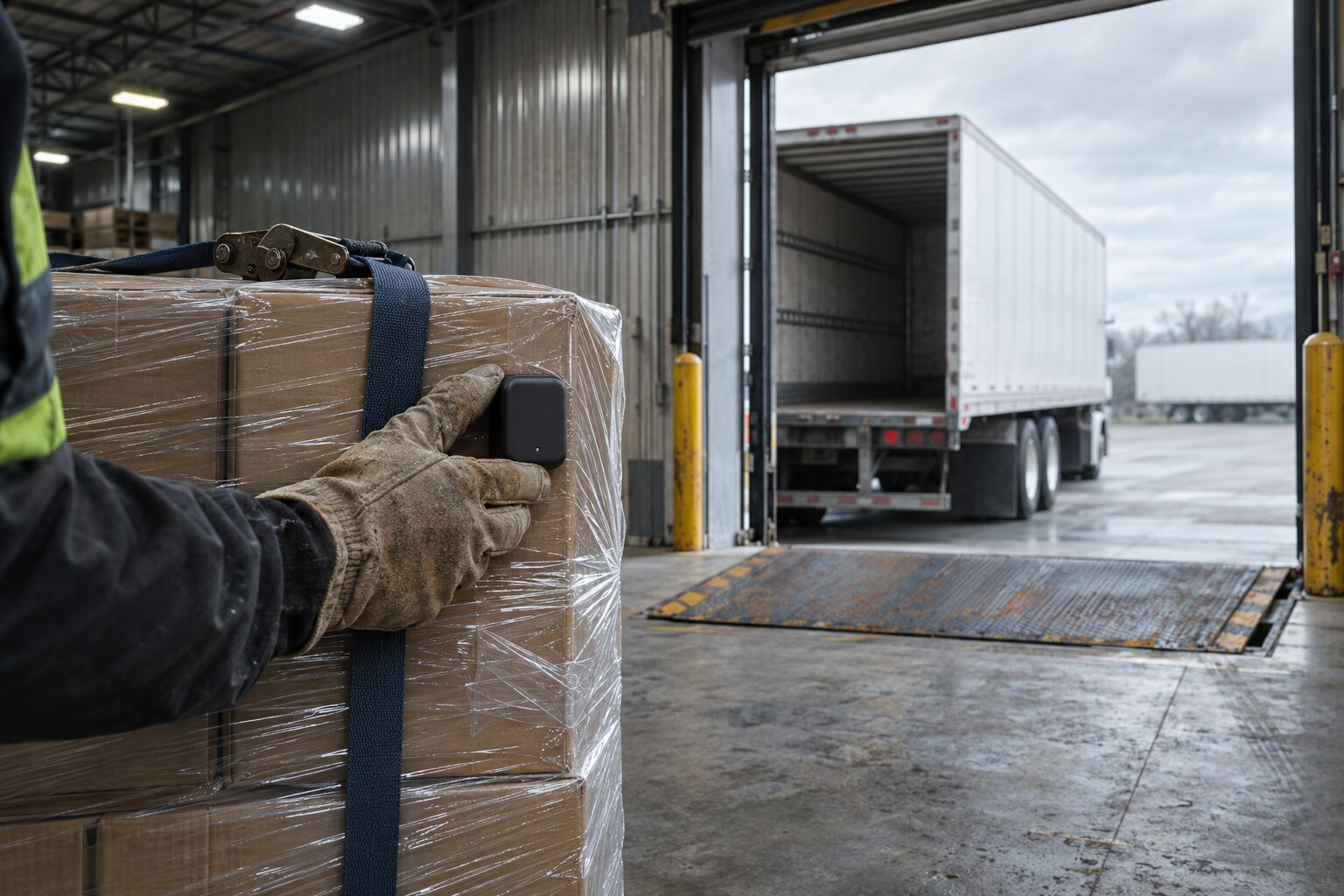
Highest-Rated 8 Luggage Trackers
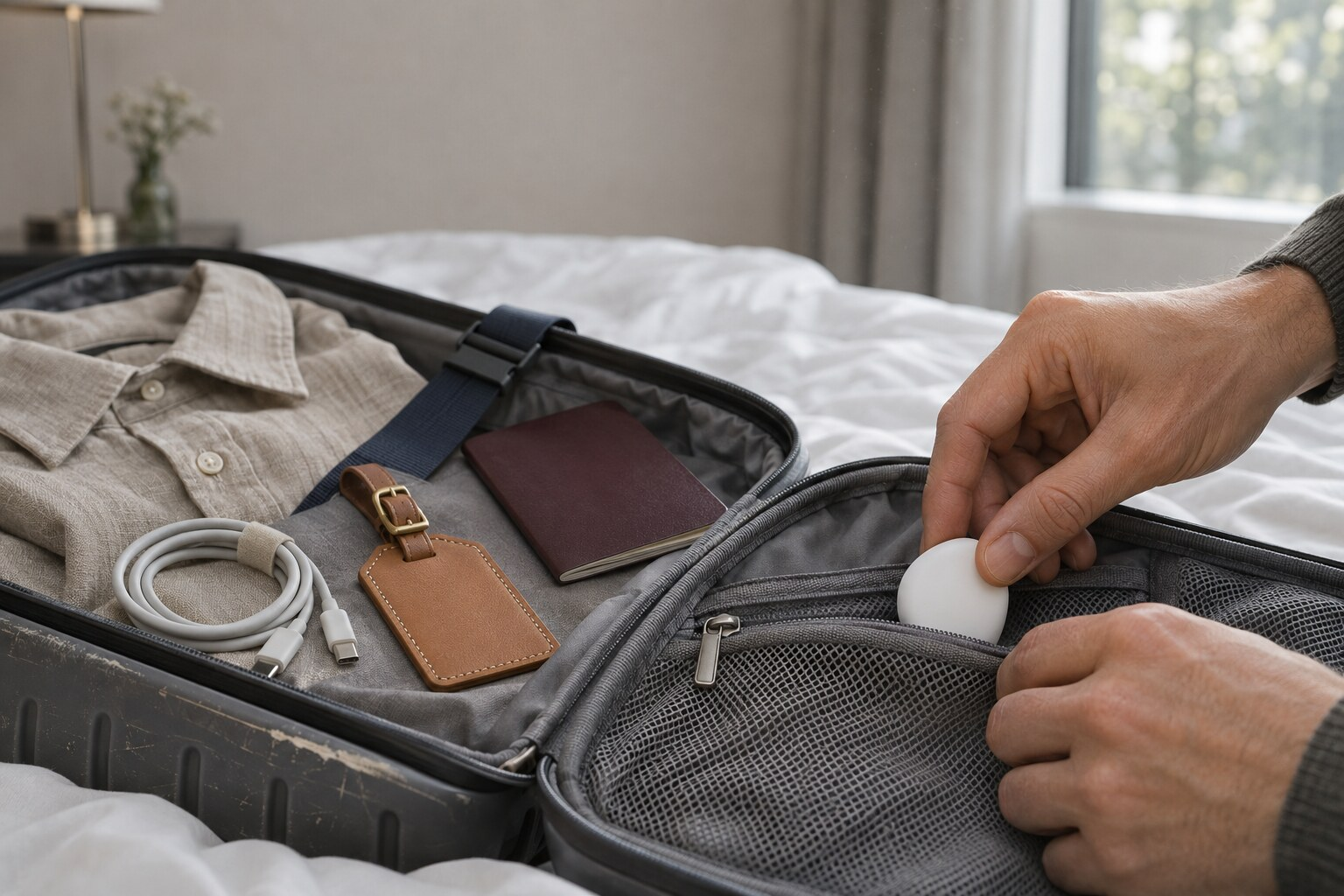
Quick answer: Pick a Bluetooth luggage tracker if occasional sightings are enough, you want no subscription, and you’re fine with nearby phones relaying its location. Pick a cellular GPS luggage tracker if the device needs to report on its own and you’ll pay for a plan where it has compatible service.
When a checked bag misses a connection, your phone shows where the tracker last reported. That is not always where the bag is now, and a luggage GPS tracker that reports on its own behaves differently from a Bluetooth tag that waits for a nearby phone.
A carry-on has a different problem. You need to find the bag you set down, or get an alert before you walk away from it. The best luggage tracker for you depends on which of those problems you’re solving.
Start with three questions. Which phone do you carry? What coverage does your destination have? How long does the tracker need to stay powered? Then decide if a last-seen location is enough or if the device needs to send its own updates. Our AirTag vs. GPS tracker guide explains what changes when you move from a Bluetooth tag to a cellular unit.
Where Luggage Trackers Go Wrong
A Bluetooth tag in a baggage hold updates only when a participating phone comes within range. Until then, the app shows the last sighting, even after the bag has moved on. An airport pin also won’t tell you which carousel or baggage office to check. With an iPhone, you can send that pin to airline staff through Find My’s Share Item Location feature.
A cellular tracker sends its own updates, but its last position goes stale once it loses service. Good coverage at home tells you nothing about coverage abroad. Read the maker’s coverage terms for your destination before you count on updates.
A dead tracker stops reporting just when a delay runs into a second day. Charge or replace the battery before you pack.
Warn anyone you share bags with. Unwanted-tracking alerts can go off for a travel companion carrying a suitcase tagged to your account, so tell them the tag is there.
| Tracker | Maker | Technology | Phone compatibility | Stated battery | Device price | Plan price |
|---|---|---|---|---|---|---|
| MicroTrack Pocket Tracker | Logistimatics | Cellular GPS (5G/4G LTE capable, GPS plus Wi-Fi positioning) | iOS or Android app, or a web browser | Up to 2 months between charges | $59.99 | $12.50 a month billed annually, or $19.99 billed monthly |
| AirTag (2nd generation) | Apple | Bluetooth (Apple Find My) | iPhone on iOS 26 or later, iPad on iPadOS 26 or later | More than a year on a replaceable battery | $29, or $99 for four | No plan |
| Galaxy SmartTag3 | Samsung | Bluetooth (Samsung SmartThings Find) | Galaxy phones and tablets on Android 12 or later; iOS 17 or later with SmartThings | Up to 550 days, or up to 790 days in Power Saving Mode, on a replaceable CR2032 | $29.99 | No plan |
| Chipolo ONE Spot | Chipolo | Bluetooth (Apple Find My) | iPhone or iPad | Up to 1 year on a replaceable CR2032 | $28, or $112 for four | No plan |
| Clip 5 | Pebblebee | Bluetooth (Apple Find My or Google Find Hub, one at a time) | iPhone or Android | Up to 12 months per charge, rechargeable | No plan | |
| Scout Travel | Knog | Bluetooth (Apple Find My) | iPhone only (Knog iOS app) | Up to 2 months between charges, USB-C rechargeable | No plan | |
| SmartTrack Link | eufy | Bluetooth (Apple Find My) | iPhone, iPad or Mac | Up to 1 year on a replaceable CR2032 | $19.99 | No plan |
| Tracki Pro | Tracki | Cellular GPS (4G LTE with 3G/2G fallback, plus Wi-Fi) | Up to 12 months per charge (10,000 mAh) |
Disclosure: Logistimatics is a client of Mo’ Saci Science.
Specifications and prices are each maker’s own, read on its website on 27 November 2026; a blank cell means the figure could not be confirmed on the maker’s US page.
1. Logistimatics MicroTrack Pocket Tracker
The Logistimatics MicroTrack Pocket Tracker is a palm-sized cellular GPS tracker that Logistimatics sells for tracking vehicles, people, luggage and equipment. It reports on its own over 5G/4G LTE, with GPS plus Wi-Fi positioning, so it does not wait for a nearby phone.
- Best for: travelers who want a checked bag to report its own location without relying on passing phones.
- Pricing: $59.99, plus a required plan of $12.50 a month billed annually or $19.99 billed monthly.
- Connectivity: 5G/4G LTE capable cellular, GPS plus Wi-Fi positioning, tracked from an iOS or Android app or a web browser.
- Standout features: geofence alerts when it leaves a set area, a 2900 mAh rechargeable battery with motion detection and an ultra-low power mode, and IP67 water resistance.
Upsides
- It sends its own location updates where it has compatible service, instead of a last sighting from someone else’s phone.
- It works with both iPhone and Android, or from a web browser.
Trade-offs
- It needs a paid plan on top of the device price.
- Logistimatics rates the battery at up to 2 months between charges and publishes no roaming terms on the product page, so charge it before you pack and confirm coverage at your destination with Logistimatics.
2. Apple AirTag (2nd generation)
The Apple AirTag (2nd generation) sends a secure Bluetooth signal that nearby devices in Apple’s Find My network detect and report. Once you’re close, Precision Finding on a supported iPhone uses Ultra Wideband to point you to the bag.
- Best for: iPhone travelers who want directions to a bag once they get close to it.
- Pricing: $29 for one or $99 for a four-pack, with no plan.
- Connectivity: Bluetooth through Apple Find My, plus a second-generation Ultra Wideband chip for Precision Finding on supported iPhones.
- Standout features: Apple’s loudest AirTag speaker yet, IP67 protection and a replaceable battery rated for more than a year.
Upsides
- Directional guidance and a louder ring give you two ways to find a bag nearby.
- Apple says an Android phone alerts its owner when an unknown AirTag travels with them, and the AirTag plays a sound if they still haven’t found it.
Trade-offs
- Setup requires an iPhone on iOS 26 or an iPad on iPadOS 26 or later. Android-only travelers need another model.
- Sightings away from your phone depend on other Find My devices passing within range.
3. Samsung Galaxy SmartTag3
The Samsung Galaxy SmartTag3 reports bag sightings through SmartThings Find. On supported Galaxy devices, Compass View shows distance and direction using Ultra Wideband or Bluetooth 6.0 Channel Sounding.
- Best for: Galaxy owners who want directional finding and a long-life replaceable battery.
- Pricing: $29.99, with no plan.
- Connectivity: Bluetooth through SmartThings Find. Samsung lists Galaxy phones and tablets on Android 12 or later, and iOS 17 or later with the SmartThings app.
- Standout features: Compass View, IP67 dust and water resistance, and a replaceable CR2032 battery.
Upsides
- Samsung rates the battery for up to 550 days, or up to 790 days in Power Saving Mode.
- Compass View gives you a direction to follow once a supported Galaxy device is in range.
Trade-offs
- Samsung builds it around Galaxy phones and tablets, and the SmartThings app is required on every phone.
- Compass View works only on Galaxy devices that support UWB or Bluetooth 6.0 Channel Sounding.
4. Chipolo ONE Spot
The Chipolo ONE Spot is a Bluetooth tag that Chipolo lists for keys, backpacks and luggage. It pairs with Apple Find My and rings at up to 120 dB for close-range searches.
- Best for: iPhone or iPad users who want a reminder before leaving a carry-on behind.
- Pricing: $28 for one or $112 for a four-pack, with no plan.
- Connectivity: Bluetooth through Apple Find My only.
- Standout features: A ring of up to 120 dB, Find My “Notify When Left Behind” alerts and a replaceable CR2032 battery rated for up to 1 year.
Upsides
- The loud ring gives you an audible cue when the bag is within earshot.
- You swap in a fresh battery before a trip instead of waiting for a charge.
Trade-offs
- Pairing requires an iPhone or iPad, which rules it out for Android-only travelers.
- Chipolo rates it IPX5 splash-proof, a lower rating than the IP67 tags in this list.
5. Pebblebee Clip 5
The Pebblebee Clip 5 is a rechargeable finder that clips onto a bag. It works with Apple Find My on iPhone or Google Find Hub on Android, one network at a time.
- Best for: Android travelers, or households with both iPhones and Android phones, who want a rechargeable tag.
- Connectivity: Bluetooth through Apple Find My or Google Find Hub, with no plan.
- Standout features: A loud buzz, a bright LED and an IPX6 water resistance rating.
Upsides
- The light and sound give you visual and audible cues when the bag is nearby.
- Pebblebee rates the rechargeable battery for up to 12 months per charge.
Trade-offs
- The Clip 5 uses one finding network at a time, so pick the one that matches the phone you travel with.
- It has to be recharged, where a coin-cell tag only needs a battery swap.
6. Knog Scout Travel
The Knog Scout Travel combines a Find My finder, a luggage ID tag and a motion alarm. A printed QR code shows a finder the contact details you choose to share. The 85 dB alarm sounds if the armed tag moves.
- Best for: iPhone travelers who want an audible motion alarm on a bag kept nearby.
- Connectivity: Bluetooth through Apple Find My and Knog’s iOS app, with no plan.
- Standout features: An 85 dB motion alarm, QR contact details, NFC, and an anti-tamper bolt on a braided stainless-steel cable.
Upsides
- Removing the tether takes a special Knog tool, so the tag stays fixed to the bag.
- Knog backs the tag with a 2-year warranty.
Trade-offs
- The app and Find My setup are iOS only.
- Knog rates the USB-C battery at up to 2 months between charges, so top it up before longer trips.
7. eufy SmartTrack Link
The eufy SmartTrack Link broadcasts over Bluetooth so nearby Apple devices relay its location through Find My. Its built-in QR code gives a finder a second way to reach you, showing only the contact details you choose to share.
- Best for: Apple users who want left-behind alerts and a scannable contact card in one tag.
- Pricing: $19.99, with no plan.
- Connectivity: Bluetooth through Apple Find My on iPhone, iPad or Mac.
- Standout features: Free left-behind alerts, a built-in QR code, a loud alarm and a replaceable CR2032 battery rated for up to 1 year.
Upsides
- Double-tapping the tag rings your iPhone, even on silent, when both are in Bluetooth range. That helps when you have the bag in hand but can’t find your phone.
- Left-behind alerts come with no monthly fee.
Trade-offs
- It works only with Apple devices, not Android or Google’s finding network.
- eufy describes it as water-resistant for rain and splashes, not as waterproof.
If phone compatibility is narrowing your shortlist, compare the networks covered in our AirTag alternatives guide.
8. Tracki Pro
The Tracki Pro is a waterproof, magnet-mount cellular GPS tracker that Tracki says is made for harsh industrial environments. Its 10,000 mAh battery and built-in magnet suit an equipment case better than a slim suitcase pocket.
- Best for: Travelers moving equipment in a case with room for a larger GPS unit.
- Connectivity: Cellular GPS on 4G LTE, falling back to 3G or 2G where 4G is not available. A service plan is required.
- Standout features: Built-in magnet, speed monitoring and geofence alerts.
Upsides
- Tracki rates the battery for up to 12 months on a single charge.
- Tracki says the 3G and 2G fallback keeps the device reporting in areas without modern networks.
Trade-offs
- It is built for vehicles and assets, not luggage, so it takes up more room than a tag.
- Location reports depend on cellular coverage, and Tracki does not publish plan pricing on the product page.
Batteries and Airline Rules
The FAA guidance on lithium batteries says spare, uninstalled lithium-ion and lithium-metal batteries, including power banks, go in carry-on baggage only. The limits are 2 grams of lithium per lithium-metal battery and 100 watt-hours per lithium-ion battery. If a bag gets checked at the gate, keep spares with you in the cabin.
Trackers with batteries installed fall under the FAA’s separate guidance for portable electronic devices. Check your airline’s rules for the bag you plan to tag.
Bluetooth Tag or Cellular Tracker: Making the Call
Choose a Bluetooth tag if a last-seen location and close-range finding cover your needs. Choose cellular if your bag must report on its own once it lands, and confirm destination coverage before you pay for a plan.
- iPhone only: AirTag (2nd generation), Chipolo ONE Spot, eufy SmartTrack Link or Knog Scout Travel.
- Galaxy phone: Galaxy SmartTag3.
- Android, or a mixed household: Pebblebee Clip 5.
- Bag reports without a nearby phone: a cellular tracker such as the Logistimatics MicroTrack or the Tracki Pro, with a service plan.
Still weighing the two technologies? Read our Bluetooth tracker vs. GPS tracker guide before you buy.
Frequently Asked Questions (FAQs)
Do luggage trackers work abroad?+
Bluetooth tags work anywhere their finding network has nearby participating devices, whether that is Apple Find My, Google Find Hub or Samsung SmartThings Find. A cellular GPS tracker needs compatible service or international roaming at your destination. Tracki says its devices carry an embedded international SIM, work in 185 countries with GSM service and charge no roaming fees. Logistimatics publishes no roaming terms for the MicroTrack, so confirm coverage with it before you travel.
Will a luggage tracker give me updates during a flight?+
Treat the location you see as the last report and check its timestamp. A Bluetooth tag needs a participating device within range, and a cellular tracker needs compatible service to send an update.
Which luggage tracker works with both iPhone and Android?+
The Pebblebee Clip 5 works with Apple Find My on iPhone or Google Find Hub on Android, one network at a time. The Galaxy SmartTag3 also runs on iOS 17 or later through SmartThings, and Compass View needs a supported Galaxy device. The Logistimatics MicroTrack, a cellular tracker, works from an iOS or Android app or a web browser.
Do I need a subscription to track my suitcase?+
Not with a Bluetooth tag. Any of the six Bluetooth tags here works as a luggage tracker without a subscription. Both cellular trackers in this guide require a service plan on top of the device.
What does an old location pin tell me?+
It tells you where the bag’s tracker last reported. Check the timestamp, and have your baggage claim details ready when you share it with airline staff.
Which trackers let a finder see my contact details?+
The Knog Scout Travel and eufy SmartTrack Link both carry QR codes a finder can scan. You choose which contact details the code shows.
Should I buy a rechargeable tag or one with a replaceable battery?+
Go rechargeable if topping up before a trip fits your packing routine: the Pebblebee Clip 5 and Knog Scout Travel charge over USB-C. Go replaceable if you’d rather drop in a fresh CR2032 and leave the charger at home: the AirTag, Galaxy SmartTag3, Chipolo ONE Spot and eufy SmartTrack Link all use one.